AS568 inch O-rings
Source by SAE AS568 dash number for inch-based designs, ports and replacement requirements.
Send dash number, compound, hardness and quantity.Review requirements →
Source O-rings by AS568 dash number, ISO 3601 metric size, inside diameter × cross-section, or drawing. We review the compound, hardness, dimensions and service conditions together.
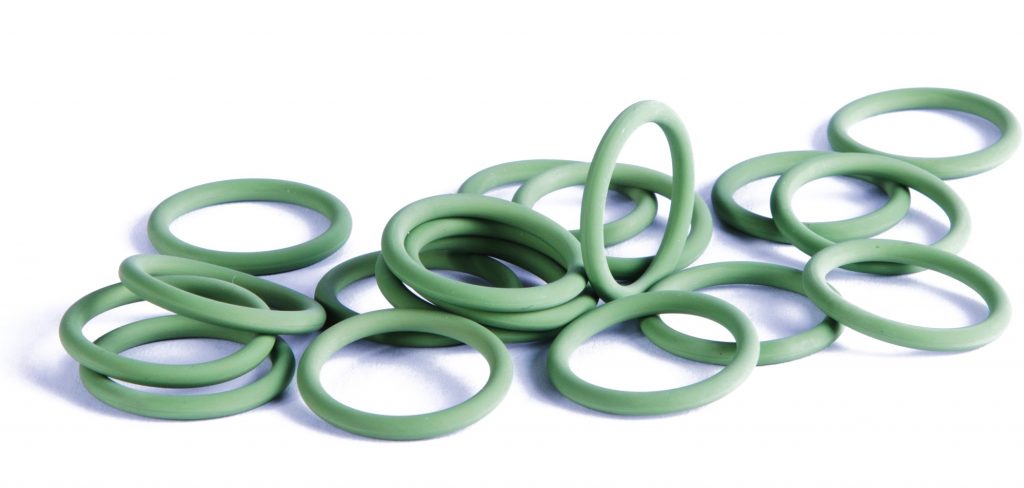
A reliable specification combines size, elastomer compound, hardness and operating conditions—not color or nominal diameter alone.
Source by SAE AS568 dash number for inch-based designs, ports and replacement requirements.
Send dash number, compound, hardness and quantity.Review requirements →Specify by standard designation or inside diameter × cross-section in millimetres.
State the tolerance class or drawing requirement.Review requirements →Non-standard dimensions, compounds and tolerances reviewed from a controlled drawing.
Include annual volume and validation requirements.Review requirements →Identify an obsolete or unmarked seal from dimensions, groove data, equipment details or a sample.
Do not identify material from color alone.Review requirements →A size standard identifies dimensions. It does not by itself define the compound, hardness, operating limit or regulatory status.
| Reference | What it addresses | What to send with an RFQ |
|---|---|---|
| SAE AS568 | Inch O-ring inside diameters, cross-sections, tolerances and dash numbers. | Dash number, compound, hardness and quantity |
| ISO 3601-1 | O-ring dimensions, tolerances and designation codes. | Size/designation, tolerance class, compound and hardness |
| ISO 3601-2 | Housing dimensions for general applications. | Application type, hardware, pressure direction and duty |
| ISO 3601-3 | Quality acceptance criteria for O-rings. | Required grade and inspection documentation |
| ASTM D1418 | Standard nomenclature for rubber families. | Polymer designation, such as NBR, EPDM, FKM or VMQ |
| ASTM D2000 / SAE J200 | Classification framework for vulcanized-rubber properties. | Complete material callout and suffix requirements |
| ASTM D2240 | Durometer hardness test method. | Shore A hardness, tolerance and report requirement |
Common nominal cross-section groups include 0-series at 0.070 in / 1.78 mm, 100-series at 0.103 in / 2.62 mm, 200-series at 0.139 in / 3.53 mm and 300-series at 0.210 in / 5.33 mm. Always use the exact dash-number dimensions and tolerances.
Specify inside diameter × cross-section in millimetres and cite the applicable ISO 3601 designation or drawing tolerance. Confirm the quality acceptance requirement separately.
Polymer family is only a shortlist. Fillers, cure systems and formulation changes affect chemical resistance, temperature capability and compression set.
| Material | Reasons to consider | Important limitations to check | Common industrial use |
|---|---|---|---|
| NBR / Buna-N | Petroleum oils, lubricants and general hydraulic or pneumatic service. | Ozone, weather, polar solvents, brake fluid and temperature limits. | Fittings, pumps and general machinery |
| HNBR | Improved heat, oxidation and mechanical performance over many conventional NBR compounds. | Exact refrigerant, lubricant and chemical compatibility. | Mobile equipment, compressors and refrigeration |
| FKM | Heat, fuels, oils and many chemical environments. | Ketones, some amines, steam, hot water and low-temperature flexibility. | Fuel systems and high-temperature equipment |
| EPDM | Water, weather, ozone, many polar fluids and selected steam duties. | Petroleum oils, hydrocarbon fuels and greases. | Water systems and outdoor equipment |
| VMQ / silicone | Broad temperature flexibility and clean static-sealing applications. | Tear strength, dynamic wear, oils, fuels and steam conditions. | Static process, appliance and low-temperature service |
| FVMQ | Low-temperature flexibility with improved fuel and oil resistance over conventional silicone. | Steam, wear and high-pressure dynamic service. | Specialized fuel and low-temperature static seals |
| FFKM | Severe chemical and high-temperature environments requiring a qualified grade. | Cost, low-temperature grade limits and supply lead time. | Chemical-processing and semiconductor equipment |
| CR / chloroprene | Weather, ozone and selected refrigerant environments. | Strong oxidizers, aromatics and exact chemical exposure. | Refrigeration and outdoor service |
O-ring hardness is commonly specified on the Shore A scale. Around 70 Shore A is a frequent starting point for general industrial elastomer O-rings, but it is not automatically correct for a particular gland or compound.
A harder compound can better resist deformation into a clearance gap, but may increase assembly force and be less forgiving of imperfect hardware. A softer compound can conform at lower closure force, but may be more vulnerable to extrusion and handling damage.
State the hardware and duty rather than the industry name alone; the same machine can contain very different sealing environments.
Covers, housings, manifolds and flanges. State whether pressure acts from inside or outside.
Plugs, ports, fittings and fixed cylindrical interfaces. Provide bore, shaft, groove and clearance.
Ports, valves, pumps and cylinders. Fluid, pressure cycling, temperature and extrusion gap are key.
List every process and cleaning medium, pressure or vacuum range, and decompression rate.
Name the exact regulatory or third-party requirement; suitability belongs to a documented compound, not a polymer family.
Define inspection, traceability, packaging and change-control needs with prototype and annual quantities.
The quotation should make the product, evidence and commercial requirements clear before samples or production begin.
Submit a drawing, validation stage, annual volume and required inspection, traceability or change-control documents.
Send multi-line requirements with dash numbers, metric sizes, compounds, hardness, packaging and annual demand.
Use dimensions, groove data, equipment reference or a sample to review recurring, obsolete or urgent requirements.
Send quantity, size or drawing, material or compound, hardness, operating media, temperature and pressure. For dynamic service, also include speed, lubrication, surface finish and cycle frequency.
It is a standardized size code tied to specified inside diameter, cross-section and tolerances. It does not define the compound, hardness or application suitability.
They are commonly described by inside diameter × cross-section in millimetres, together with the applicable ISO 3601 designation or class when required.
Measure inside diameter and cross-section without stretching the ring. Because an aged seal may be deformed, cross-check it against groove and mating-hardware dimensions.
NBR is often considered for petroleum oils, while HNBR or FKM may be evaluated for additional heat or media demands. Identify the exact fluid, additives and temperature before selecting a compound.
EPDM is generally not selected for petroleum oils or hydrocarbon fuels. Confirm the actual compound against the exact medium and operating conditions.
Around 70 Shore A is a common industrial starting point. The correct hardness depends on compound, pressure, clearance, assembly force, hardware and the need to resist extrusion.
They may when pressure and clearance create extrusion risk. Review pressure, temperature, compound, clearance gap, pressure direction and cycling together.
Send a controlled drawing, groove dimensions, equipment information or an available sample. Feasibility, tooling, tolerance, compound, quantity and timing are confirmed in the quotation.
State the exact FDA, NSF, WRAS, KTW, REACH, RoHS or other requirement and intended conditions. Availability and documentation must be confirmed for the exact compound and supplied product.
The fastest review starts with dimensions, material, media, temperature, pressure and quantity. If a value is unknown, tell us what still needs to be identified.
Final suitability depends on the exact compound, hardware, tolerances, operating conditions, installation and application validation.