Chemical-resistant static sealing

FEP and PFA Encapsulated O-Rings

Combine a chemically resistant fluoropolymer sealing surface with an energizing core selected for the duty. Auter reviews FEP- and PFA-jacketed constructions with FKM, silicone (VMQ), or stainless-steel spring cores.

  • FEP or PFA jacket
  • FKM, VMQ or spring core
  • Metric, inch & custom enquiries
  • Drawing or size review
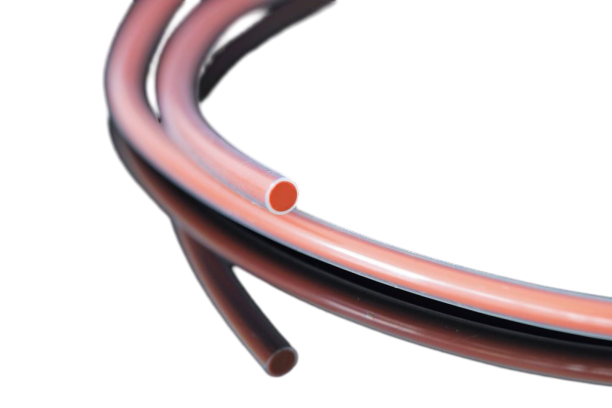
FEP encapsulated O-ring showing the fluoropolymer jacket and resilient core
FEP or PFA jacketFKM, VMQ or spring coreMetric, inch & custom enquiriesApplication review
How it works

Two functional layers solve different parts of the seal

A seamless FEP or PFA jacket forms the media-facing surface, providing broad chemical resistance, low adhesion and low friction. A resilient FKM or silicone core supplies the elastic contact force that solid PTFE lacks.

This construction is considered when a conventional elastomer lacks chemical resistance but a solid PTFE ring cannot supply enough elastic recovery. It is most often used as a static seal in non-abrasive service.

Jacket and core matrix

Choose the whole construction—not one material name

The jacket, core, gland and installation route work as a system. Every option remains subject to application and product-specific confirmation.

ConstructionMain reason to considerTypical fitConfirm before selection
FEP + FKMBroad chemical barrier plus good core recoveryGeneral static chemical-processing dutiesMedia/concentration, temperature, pressure, groove and compound data
FEP + VMQChemical barrier plus low-temperature flexibilityStatic duties needing a softer core responseExact VMQ grade, thermal cycle, clamp load and documentation
PFA + FKMMore demanding jacket optionHigher-temperature static process equipment candidatesActual grades, cycling, pressure, installation and jacket integrity
PFA + VMQPFA jacket with silicone-core flexibilityWide-temperature static-duty candidatesCompound limits, compression behavior, purity and compliance
FEP/PFA + springMechanical energizing without an elastomer coreSpecial engineered temperature, vacuum or cryogenic candidatesSpring grade, load/deflection, groove, leakage target and validation
Good starting conditions

When to choose an encapsulated O-ring

This family is strongest when chemical resistance and elastic contact pressure are both needed in a controlled static gland.

Media challenge

A standard elastomer is not sufficiently resistant to the complete process and cleaning media.

Elastic recovery

A solid PTFE ring is unattractive because the hardware still needs resilient sealing force.

Static duty

The seal is static, or movement is very slow and specifically reviewed.

Safe installation

The gland and assembly path avoid excessive stretch, twisting, sharp bending and damaged edges.

Engineering honesty

When not to use an encapsulated O-ring

Do not default to this construction for reciprocating or rotary motion, abrasive media, rough contact surfaces, substantial elongation, folding, high press-in force, or high pressure without a validated gland and extrusion strategy.

Split hardware, burrs, sharp edges and restricted assembly access can damage the jacket. Chemical, food, pharmaceutical, semiconductor, oxygen, vacuum and cryogenic duties also require the appropriate product-specific evidence.

Compare alternatives

Encapsulated O-ring vs. other seal options

The best chemical-resistant seal is the one whose limitations match the hardware, motion and validation plan.

OptionStrengthLimitationGood starting point when
Elastomer O-ringHigh elasticity and simple installationCompound-specific chemical and temperature limitsA documented elastomer is compatible
FEP/PFA encapsulatedBroad media barrier plus elastic coreJacket damage, limited stretch, primarily static useElastomer resistance is inadequate but recovery is needed
Solid PTFE O-ringBroad resistance and simple material constructionLow recovery and cold flowHardware maintains load and accounts for PTFE behavior
FFKM O-ringElastomeric behavior with broad grade-specific capabilityHigher cost; compatibility remains grade-specificPerformance or installation flexibility justifies it
Spring-energized PTFEBroad engineered design windowDedicated profile and gland engineeringMotion, pressure, vacuum or extreme service exceeds an O-ring construction
Dimensions and groove review

Metric, inch, standard and custom enquiries

Availability is confirmed by jacket/core construction, inside diameter, cross-section, tolerance, quantity and inspection requirement. An ordinary rubber O-ring size is not automatically a drop-in encapsulated replacement: the jacket changes stretch, compressibility and dimensional behavior.

For a size review, send

  • Inside diameter (ID / d1) and cross-section (CS / d2)
  • Groove diameter, width and depth
  • Internal, external or face-seal arrangement
  • Existing standard or part reference
  • Mating material, finish, edge radii and installation access
  • Required tolerance, report and sampling plan
Installation and handling

Protect the jacket from receipt through assembly

Use a controlled installation procedure for the exact construction and gland. Universal heat, soak, stretch or compression instructions are not appropriate.

  1. InspectCheck for cuts, flat spots, wrinkles, kinks or jacket damage.
  2. PrepareClean the groove and remove burrs, sharp edges, chips and contamination.
  3. ProtectCover threads, keyways, ports and corners with a suitable sleeve or cone.
  4. InstallUse only approved lubricant or controlled warming; avoid twisting, folding and excessive stretch.
  5. ValidateAllow recovery, inspect seating, then complete the agreed functional test.
Typical applications

Describe the real duty—not only the industry

Media, cleaning, cycling, surface condition and documentation can change the answer inside the same piece of equipment.

Chemical processing

Flanges, vessel covers, filters, pumps, valves and pipelines exposed to solvents or aggressive chemicals.

Food and beverage

Low-contamination surfaces and cleaning chemicals, subject to exact compound and finished-part documentation.

Pharma and bioprocess

Applications where purity, extractables, traceability and cleaning or sterilization cycles must be specified.

Pumps and valves

Static body joints, covers and flanges; stem duties require separate movement and wear review.

Semiconductor systems

Only after particle, extractable, outgassing, cleaning, packaging and traceability requirements are confirmed.

Cryogenic candidates

A separately engineered construction validated for the fluid, thermal cycling, hardware contraction and leakage target.

Failure diagnosis

Start with the jacket, gland and assembly history

Visible symptoms can help identify which inputs need review before the next trial.

SymptomPossible causeCheck first
Jacket split or cutSharp edge, excessive stretch or forced installationInstallation path, edge radii and handling method
Crease or kinkFolding, twisting or high assembly forceSection, groove access and approved procedure
Chemical attack on coreJacket damage or media ingressBarrier integrity, mixture, temperature and exposure
Leakage after cyclingWrong core response, loss of load or gland movementCore, compression, hardware expansion and cycle limits
Extrusion or nibblingExcess pressure, gap or unsupported dutyPressure differential, clearance and alternative design
Rapid surface wearDynamic or abrasive serviceMotion, finish, contamination and alternative profile
Encapsulated O-ring FAQ

Questions buyers and engineers ask

What is an FEP encapsulated O-ring?

It is a seal with a seamless FEP jacket around a resilient core, commonly FKM or silicone. The jacket provides the media-facing chemical barrier, while the core provides elastic contact force.

What is the difference between FEP and PFA encapsulation?

Both are fluoropolymer jacket materials with broad chemical resistance. PFA is often considered for a higher-temperature or more mechanically demanding window, while FEP is a common general-purpose starting point. Final selection requires grade- and construction-specific data.

Should I choose an FKM or silicone core?

FKM is commonly considered for compression-set behavior and compatible hot service. Silicone is commonly considered for low-temperature flexibility and a softer response. Review the jacket, exact core compound, temperature cycle, clamp load and documentation together.

What is a spring-core encapsulated O-ring?

It uses a stainless-steel spring inside the FEP or PFA jacket instead of an elastomer core. Spring material, load, deflection, jacket, groove, pressure or vacuum, media, temperature cycle and leakage requirement must be validated for each application.

Can an encapsulated O-ring replace a standard rubber O-ring?

Not automatically. It is less stretchable and compressible, may require different installation access and can behave differently in the gland. Verify size, groove, compression, pressure, media and assembly before substitution.

Can FEP/PFA encapsulated O-rings be used dynamically?

They are primarily static seals. Slow movement requires specific review; frequent reciprocating or rotary motion and abrasive contact can damage the jacket.

Are encapsulated O-rings suitable for high pressure?

Do not assume so. Capability depends on gland clearance, extrusion gap, temperature, section, construction, pressure cycling and support. Another seal or a backup element may be required.

Are all FEP encapsulated O-rings FDA compliant?

No universal claim should be made. Request documentation and traceability for the exact jacket, core compound, finished part, process and applicable regulation.

Are FEP encapsulated O-rings the same as PTFE O-rings?

No. An encapsulated ring has a thin melt-processable fluoropolymer jacket around a resilient core. A solid PTFE O-ring is PTFE throughout and has different elasticity, creep, installation and gland behavior.

What information is needed for a quote?

Provide ID and cross-section, groove drawing, chemical and concentration, temperature range, pressure or vacuum, static or moving duty, surface condition, quantity and required inspection or compliance documents.

Engineering RFQ

Request an encapsulated O-ring recommendation.

Send actual operating conditions so the jacket, core, size and limitations can be reviewed before quotation.

  • Chemical name, concentration and cleaning media
  • Temperature cycle and pressure or vacuum
  • Static or moving duty and gland drawing
  • Size, quantity and required documentation

Final suitability depends on the exact compounds, media, temperature, hardware, installation and application validation.

Encapsulated O-ring application

We use your details only to respond to this inquiry.